
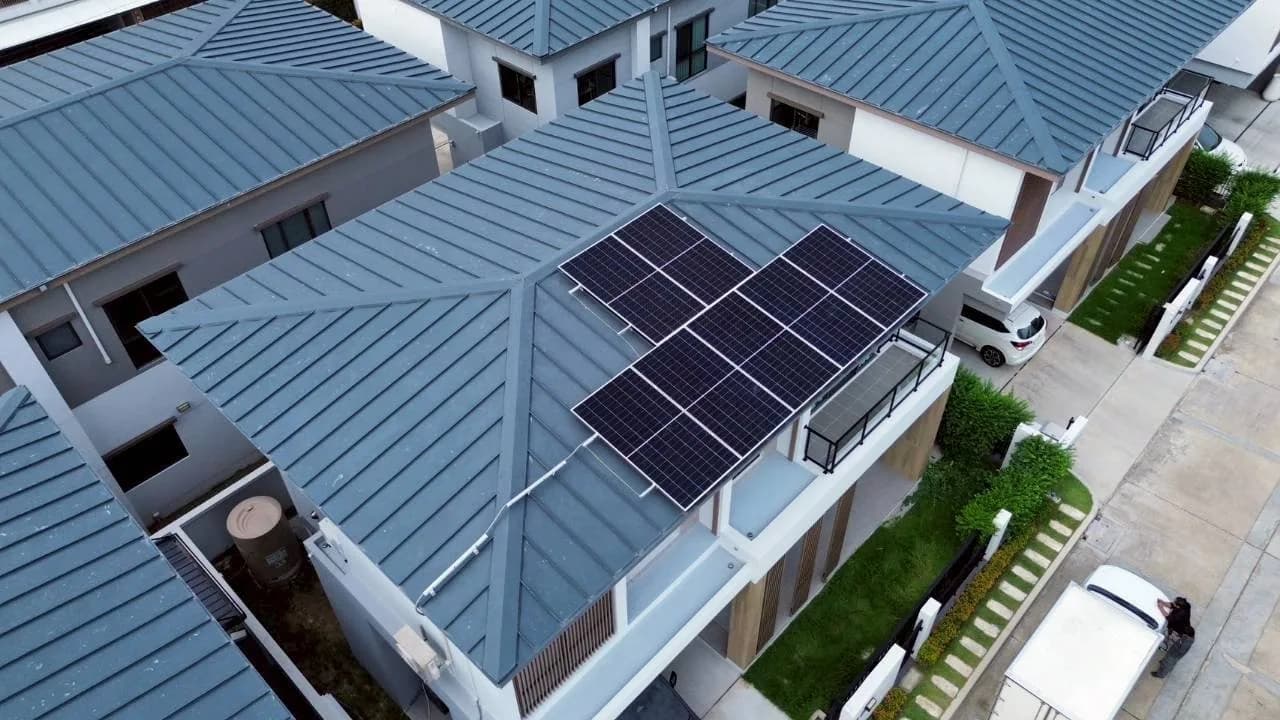
Metal sheet
The easiest to work with. L-feet with sealing washers at each penetration, or clamp-on fixings where the profile allows. Check the sheet thickness and the condition of the purlins, since thin sheeting handles neither weight nor wind uplift well.
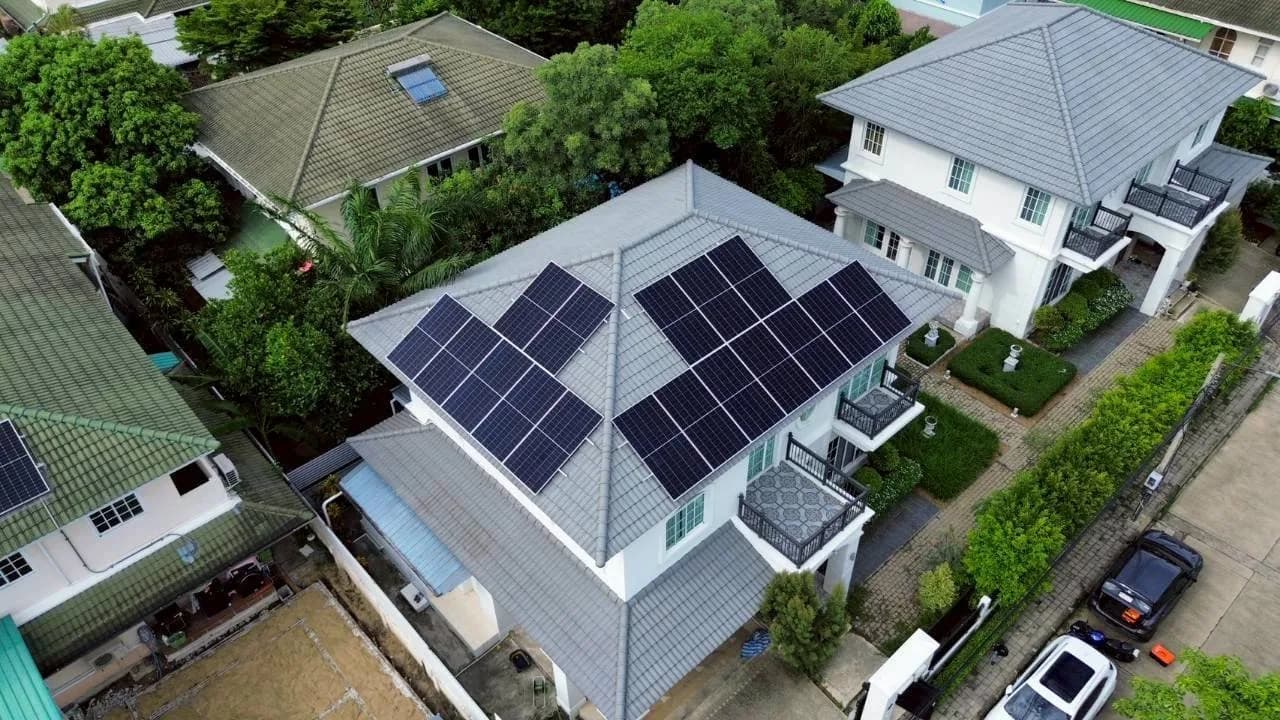
Concrete and cement tiles
Feet are bolted to the battens and the affected tile is swapped for one with a cut-out. This work demands care: cracked tiles from foot traffic are the most common cause of leaks.
Flat concrete roofs
Ballasted or anchored frames with proper waterproofing. Tilt is free to optimise, so yields are often the best, but structural loading and drainage must be planned.
Watch for these on any roof
- Roof age. If replacement is near, replace before installing.
- Shading from trees, water tanks or neighbouring buildings, morning and afternoon.
- Orientation and tilt. South-facing gives the best yield in Thailand.
- Cable routes and distance to the cabinet.
More articles
20 August 2026
How high does your bill need to be before solar pays off?
The answer is not just the bill amount. What matters most is how much you consume during daylight.
Learn more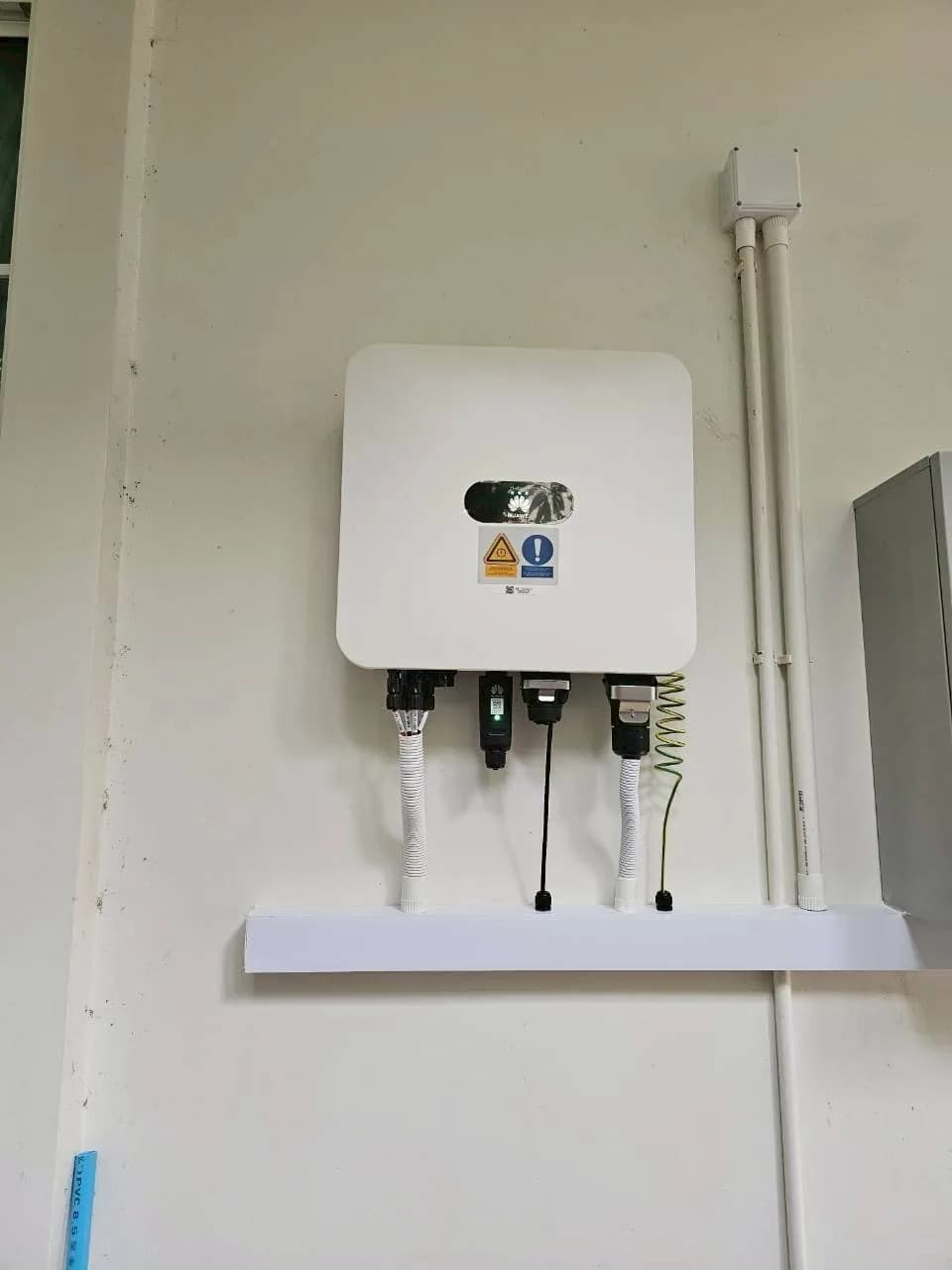
13 August 2026
On-grid, hybrid or off-grid: which system should you choose?
The three system types differ in how they handle surplus power and outages, and that drives the price.
Learn more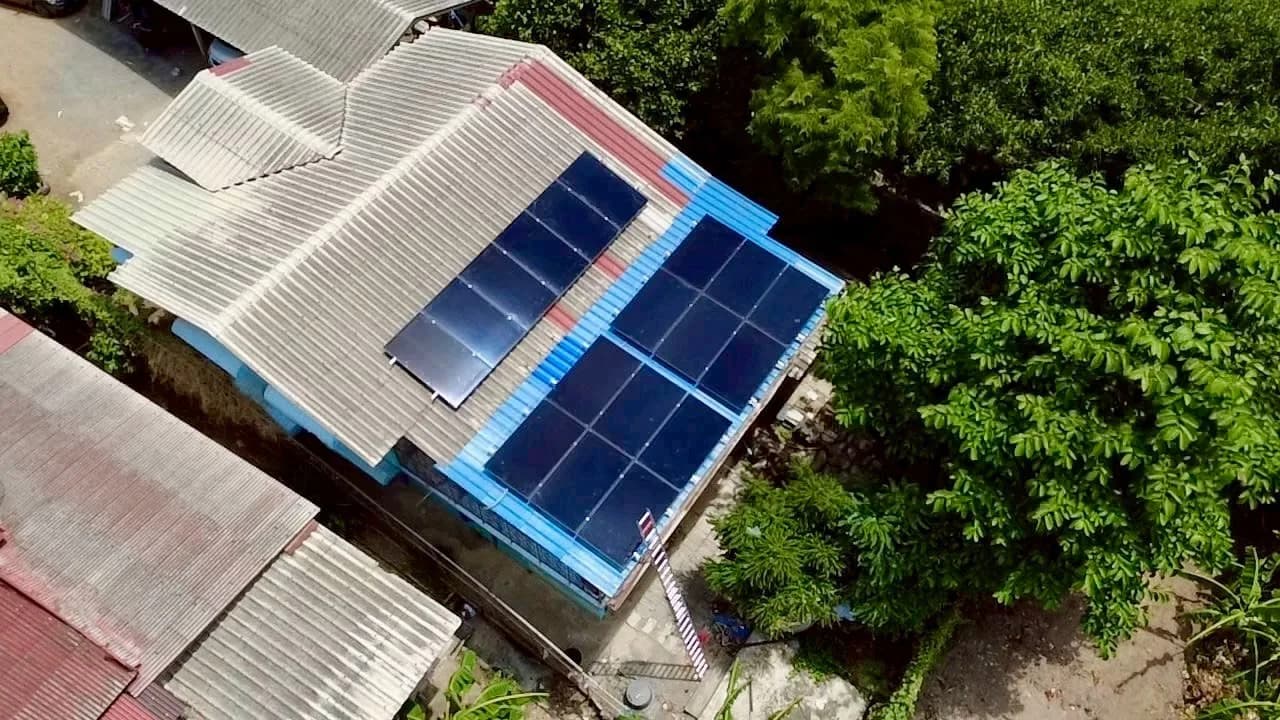
6 August 2026
Rooftop solar permitting in Thailand: who you need to file with
Paperwork is what usually delays a project. Knowing the sequence helps you plan the timeline.
Learn more